Beyond the Campsite: Unexpected Places to Use Camping Furniture and Sleeping Bags

When most people think of camping chairs, portable tables, and sleeping bags, they picture a campground tucked among the pines. But today’s camping gear is designed for much more than overnight adventures.

Lightweight, comfortable, and easy to transport, camping furniture and sleeping bags have become go-to companions for everything from local events to backyard gatherings. Here are some of the best places to put your outdoor gear to work—even when you’re not heading to a campsite.

Concerts, Festivals, and Community Events

Summer is packed with outdoor concerts, farmers markets, festivals, and community celebrations. A comfortable camp chair can turn an evening on the lawn into a relaxing experience, while a lightweight blanket or sleeping bag can provide warmth when temperatures dip after sunset.

Whether you’re enjoying music at the park or watching fireworks with family, portable seating often becomes the most sought-after item at the event.

Backyard Gatherings

Who says camping gear has to leave home?

Camping chairs are perfect for backyard cookouts, bonfires, graduation parties, and family gatherings. Unlike traditional patio furniture, they can be moved wherever the conversation happens and stored away when not in use.

A sleeping bag can also be the secret ingredient for backyard sleepovers, stargazing nights, or impromptu movie nights under the stars.

Sporting Events and Tournaments

Parents, grandparents, and dedicated fans know that youth sports often involve long hours on the sidelines. Comfortable camping chairs, portable shade shelters, and small folding tables can make tournament weekends significantly more enjoyable.

For early morning games or chilly fall evenings, a sleeping bag can double as an oversized blanket to keep spectators warm and comfortable.

Cabin and Lake Life

In the Northwoods, camping furniture often becomes part of everyday lake living. Extra camp chairs around the fire pit, portable tables at the beach, and sleeping bags for overnight guests all come in handy throughout the season.

Because camping furniture is lightweight and easy to move, it’s ideal for gathering wherever the best view—or the best conversation—happens to be.

Tailgating and Game Days

Before the game begins, camping furniture helps create a comfortable gathering space for friends and family. Folding chairs, camp tables, and insulated accessories make tailgating more organized and enjoyable.

Sleeping bags can even provide extra warmth during late-season games when temperatures begin to drop.

Watching the Stars

One of the simplest pleasures of summer is lying under a clear night sky. A sleeping bag paired with a comfortable camp chair creates the perfect setup for stargazing, meteor showers, or simply enjoying a quiet evening outdoors.

No campsite reservation required.

Emergency Preparedness

Camping gear can also prove valuable when life doesn’t go according to plan. Sleeping bags, lanterns, and portable furniture can provide comfort during power outages, unexpected overnight guests, or emergency situations.

Having a few quality pieces on hand means you’re prepared for both adventures and surprises.

Road Trips and Day Trips

Camping furniture is perfect for spontaneous stops along the way. Whether you’re enjoying a scenic overlook, a picnic by the lake, or a roadside lunch, a comfortable chair can turn a quick stop into a memorable experience.

A sleeping bag stored in the vehicle provides warmth and comfort whenever plans change unexpectedly.

More Than Camping Gear

The best outdoor equipment isn’t limited to one purpose. Camping furniture and sleeping bags are designed to help people relax, gather, and enjoy time outdoors—whether that’s deep in the woods, at the ball field, around a backyard fire, or beside a Northwoods lake.

The next time you reach for your camping gear, don’t wait for a camping trip. Some of its best uses might be much closer to home.

Recommended Nemo Equipment Gear

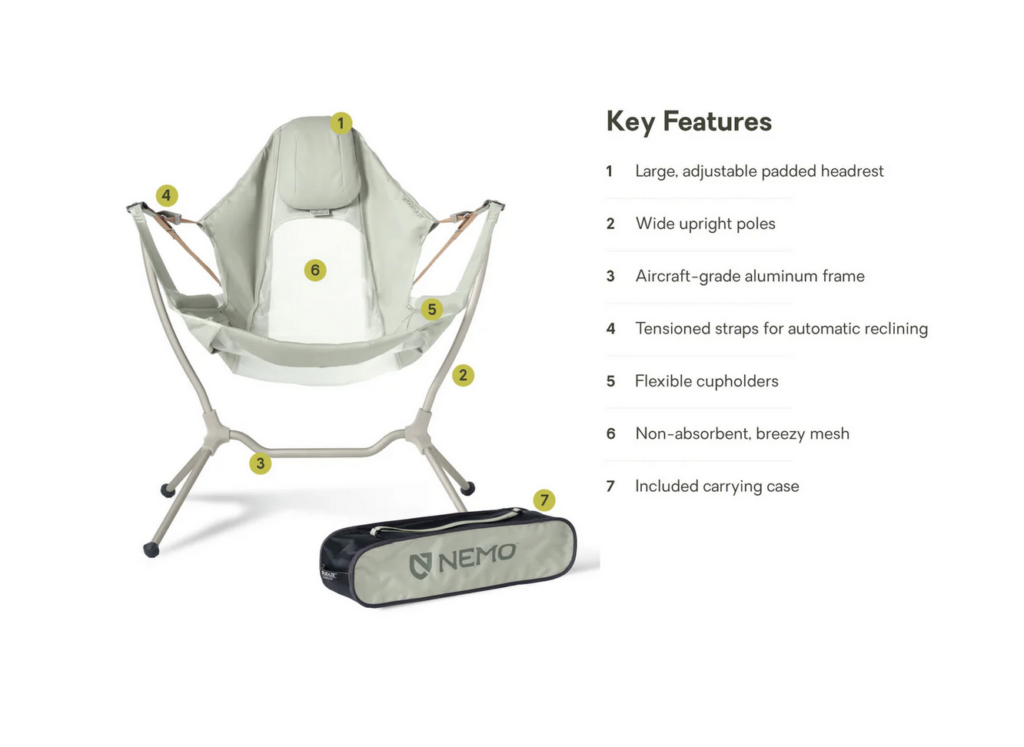
Stargaze Reclining Camp Chair

Moonlander™ Dual-Height Camp Table

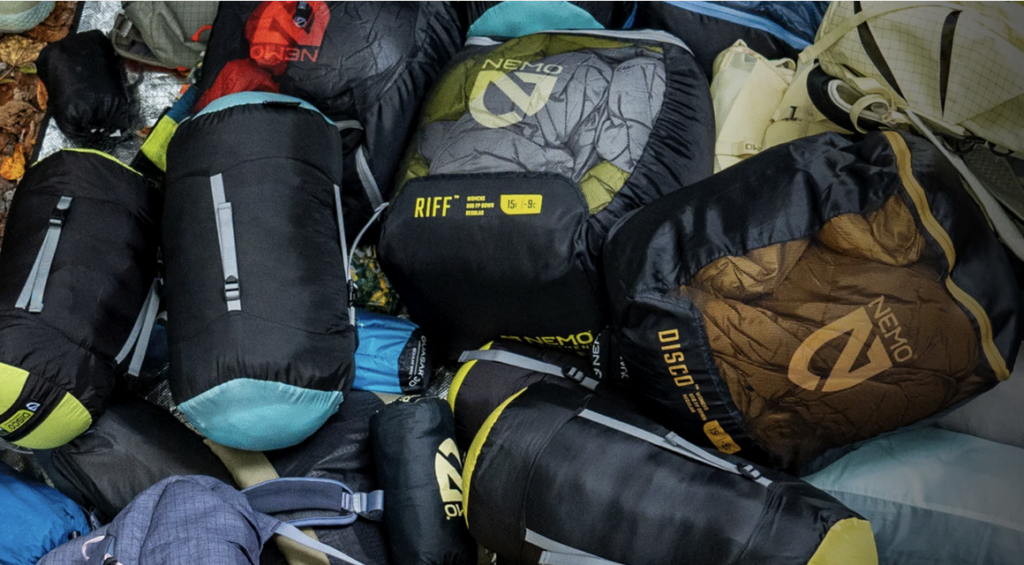
Disco™ Endless Promise® Down Sleeping Bag

Understanding Sleeping Bag Temperature Ratings

Nemo Equipment Experts Spill the Tea

Waking up well-rested can make all the difference in maximizing the next day’s adventures. Here’s a simplified guide to picking the right sleeping bag temperature rating for you and your plans.

Article by Nemo

WHY DO SLEEPING BAGS LIST SEVERAL TEMPERATURES?

The standardized testing used to assign temperature ratings to sleeping bags (the ISO Test) provides three temperature thresholds to help guide users, a COMFORT rating, a LIMIT rating, and an EXTREME rating. The names can be a bit misleading, but the reason for offering all three is because sleep comfort is a very personal preference, and whether you sleep warm or cold at night determines how much insulation you need in your bag. 

Typically, sleeping bags for women have more insulation in them, making them roughly 10–15 degrees Fahrenheit warmer than similarly rated men’s bags based on the premise that the average woman sleeps colder than the average man. But many of us live to break the rules, so these stereotypes shouldn’t blindly determine your own comfort and safety. It’s best to know how the ratings work to ensure that you’re choosing the bag that best matches the mood of your hypothalamus at 3:00 a.m. 

WHAT DOES EACH TEMPERATURE MEAN?

According to the ISO Test, the COMFORT rating is based on the air temperature at which the “average female” can sleep comfortably through the night (i.e. not curled up in a ball for warmth). The way we like to think of it is this: If you tend to sleep cold — you’re the blanket hog who’s always chilly — then you should pay closest attention to a bag’s COMFORT rating. That’s the lowest temperature at which your bag is likely to provide a cozy night’s sleep. 

The LIMIT rating is based on the temperature at which the “average man” can maintain his thermal equilibrium in a curled-up positionBasically, according to the test, the “average man” won’t necessarily be comfortable at this temperature, but he can sleep without expending energy shivering and is not in danger of hypothermia (the dream scenario, right?!). A more general way of interpreting this data is to apply it to warm sleepers. If you’re a warm sleeper — the fewer layers, the better! — then the LIMIT temperature is likely most relevant for you. That’s the temperature at which your bag shouldn’t be too hot or too cold. (Be prepared to supplement your bag with extra layers if this is your first time testing it out!) 

The EXTREME rating gives an idea of how cold the air could be before there’s serious risk of death from hypothermia in a matter of hours. Realistically, you want to avoid counting solely on the bag for survival at that temperature; extra layers, a fire, or sharing body warmth are likely necessary, as well.  

No matter which temperature bag you choose, you should always properly prepare before a night sleeping outside. Check the weather before you go and leave a safe margin between expected nighttime lows and your bag’s rating. 

HOW ARE THESE RATINGS DETERMINED?

Sleeping bags today are rated according to the International Organization for Standardization standard, using ISO 23537 (“the ISO Test” we reference above). The test involves placing a heavily instrumented electronic manikin, clad in long underwear, inside the sleeping bag in question, and positioning both on top of a foam sleeping pad. The temperature of the air is then cooled, and the amount of electrical energy needed to maintain the manikin’s initial temperature is measured. (If it takes a lot of energy input to keep the manikin toasty, then the bag isn’t very warm.) 

Through rounds of experimentation, these results have been correlated to the real-world outcome and the test can help predict what kind of comfort a person can expect from the bag. Here’s where it gets tricky, though: All our internal heat-generating engines run a little differently. Some of us pile on the blankets at night and some of us sleep in our skivvies with the window open in February. Individual preference, metabolism, and age can all throw a wrench into the simple-sounding outline above.  

We’ve done our best to translate the information into easier-to-understand guidelines, but it’s important to keep in mind that they’re not hard and fast rules. If you need further guidance in choosing your sleeping bag, Shepherd & Schaller’s experts are here to assist and Nemo’s Customer Service Team is happy to help too! 

How to fit and adjust: Osprey Frame Packs

The experts at Osprey have it dialed in. All content from Osprey.com

How To Fit Your Backpack

Learning how to fit your backpack doesn’t have to be complicated. Start by adding a little weight to your pack. It doesn’t have to weigh exactly what it would for your chosen activity but the closer it is to real life the better the fit. Carefully lift the pack onto your back from your knees. If it’s heavy then get someone to help you shoulder the pack.

Adjust the torso length

Most Osprey packs feature an adjustable torso length. These allow you to slide the harness up or down to perfectly fit your back length. You can guess at the right length for your back for now.

Once you have completed the following steps you should feel no gap between your back and the pack. If there’s a gap then tweak the back length and see if that solves it.

Fix & tighten the hip belt

Once the pack is comfortably on your back, the first attachment point is the hip belt strap. It’s essential that the hip belt strap is adjusted first as it distributes the weight evenly between legs and lower lumbar rather than the weaker points like the shoulders and arms.

Try to position the hipbelt over the upper half of your pelvis bone for maximum comfort.

Tighten harness straps

Next, the harness straps need to be pulled downwards so that the webbing on the harness is comfortably tight, much like the laces on your shoes.

The harness shouldn’t impede breathing or be too tight around the collar bone area.

Adjust load lifters

Load lifters, (the straps that connect the upper part of the main pack to the shoulder straps), should be pulled forward so that pack runs straight up and down your back. The close centre of gravity will allow weight to flow directly down to the ground.

The optimum angle for load lifters is around a 45 degree angle, this will ensure that the pack is straight to your back.

Clip & fix sternum strap

Lastly, fastening the strap across the chest (called the sternum strap), pulls the harness in to the chest and away from areas containing lots of blood vessels and nerves. If the harness is too tight it’ll restrict breathing, but if the sternum strap is too loose then you can end up with tingly or numb fingers!

That’s it. With ‘real life’ weight added you can adjust your fit by using these simple principals. Now get fitting!


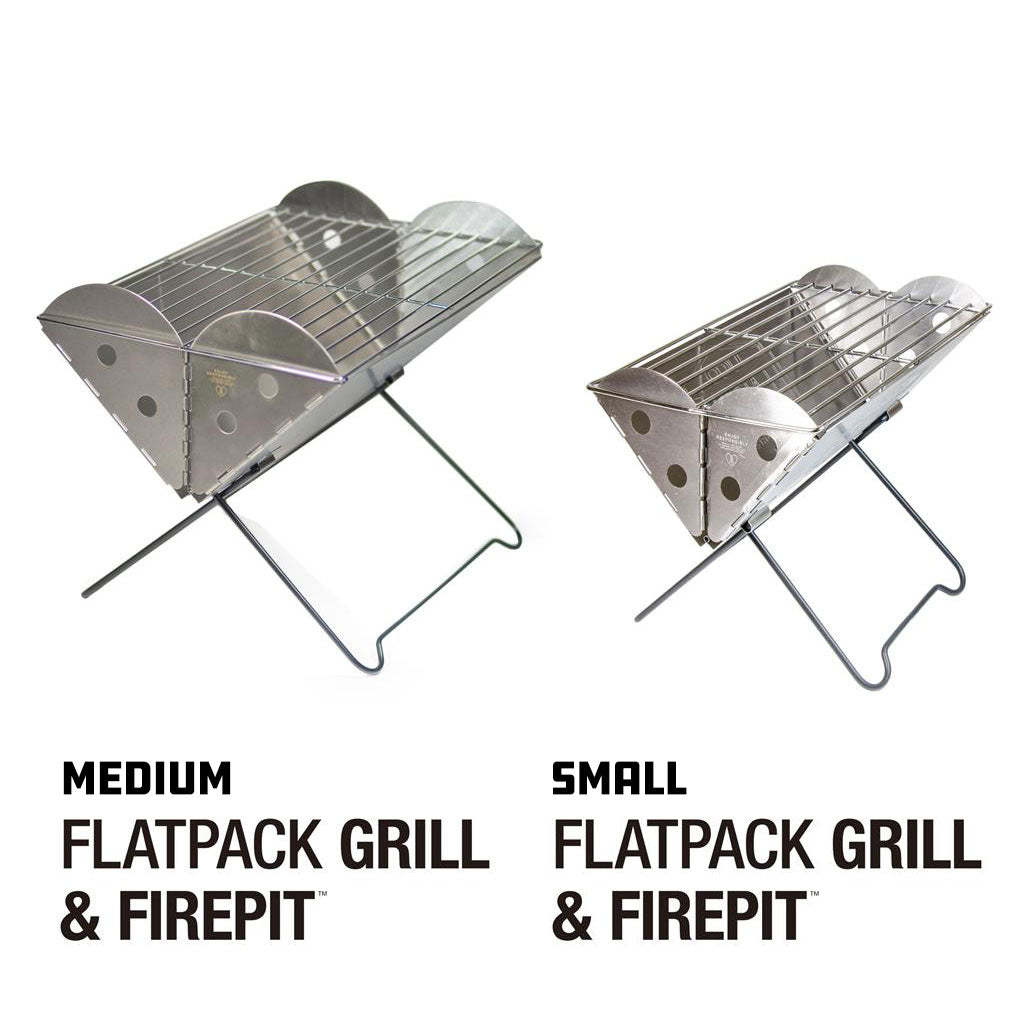
Flatpack Portable Grill Small, Easy, Efficient

FLATPACK SMALL PORTABLE GRILL & FIREPIT

FLATPACK SMALL PORTABLE GRILL & FIREPIT

FLATPACK SMALL PORTABLE GRILL & FIREPIT

FLATPACK SMALL PORTABLE GRILL & FIREPIT

UCO FLATPACK SMALL PORTABLE GRILL & FIREPIT

Mini Flatpack Grill $39.99

Flatpack Grill $49.99


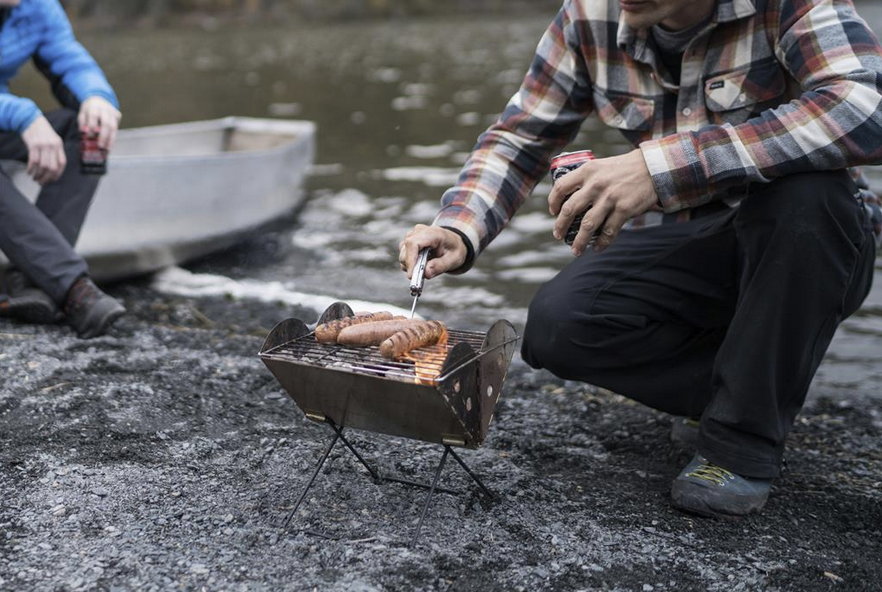
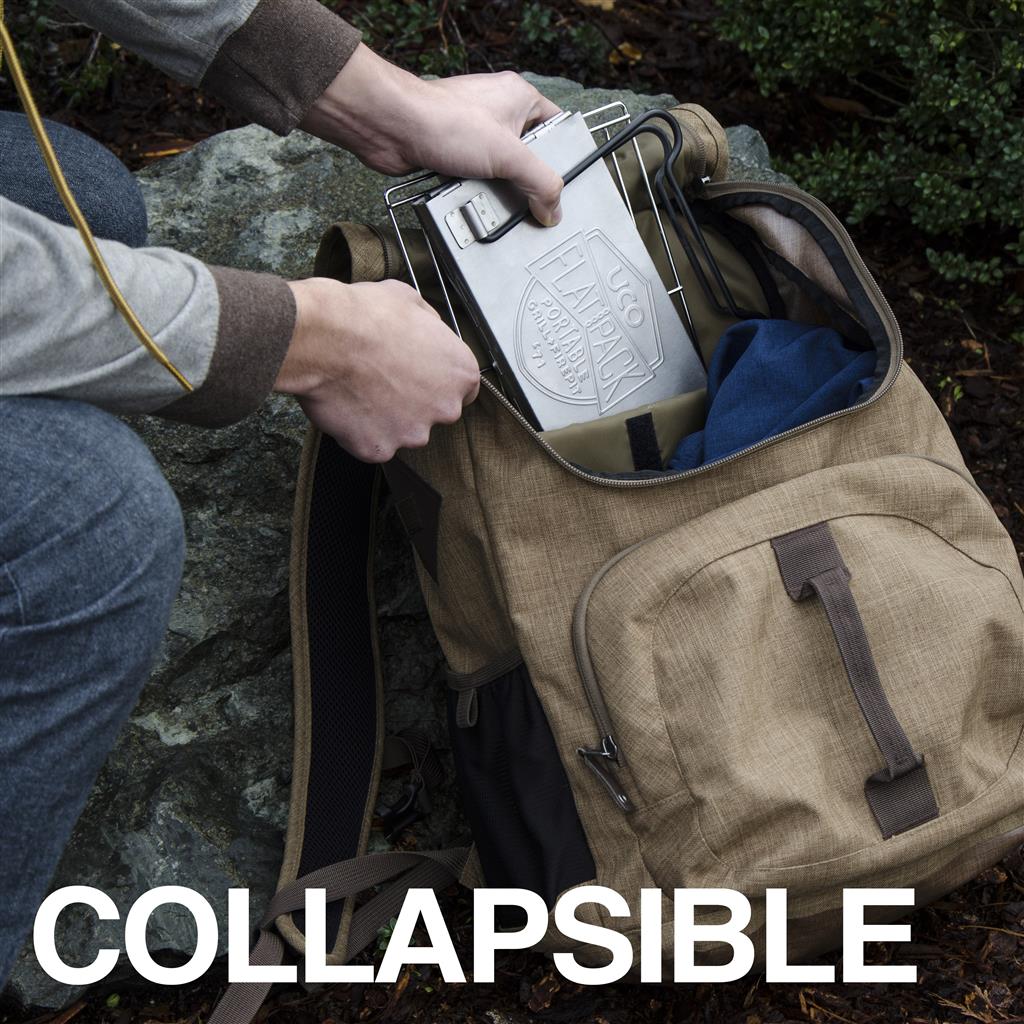
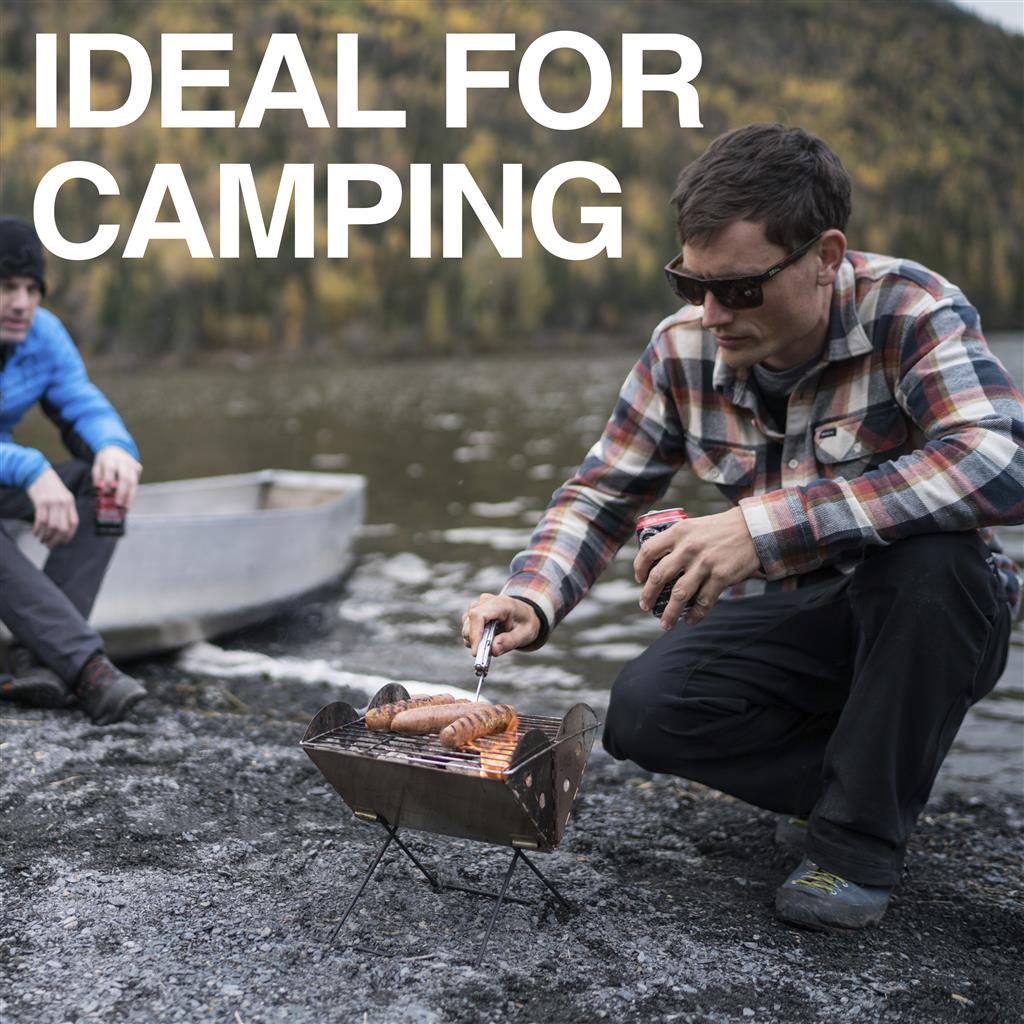
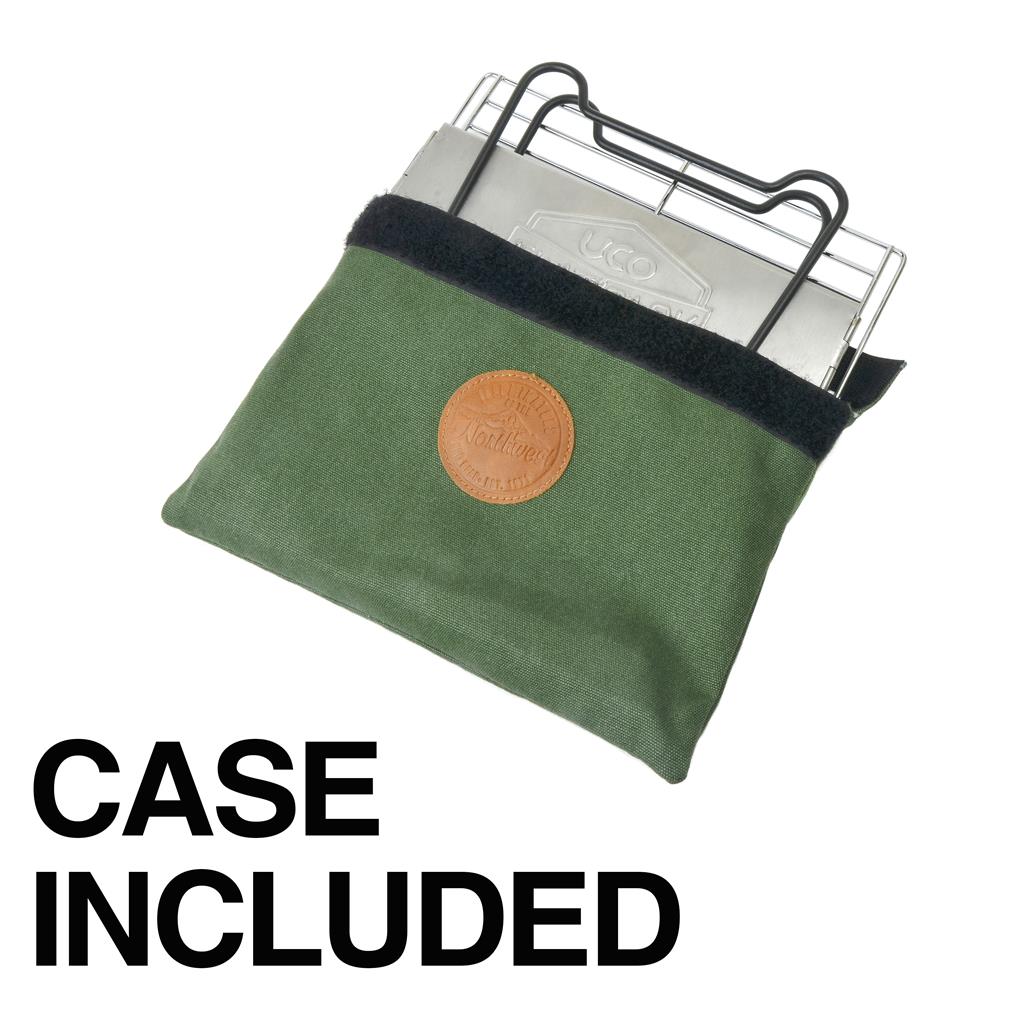
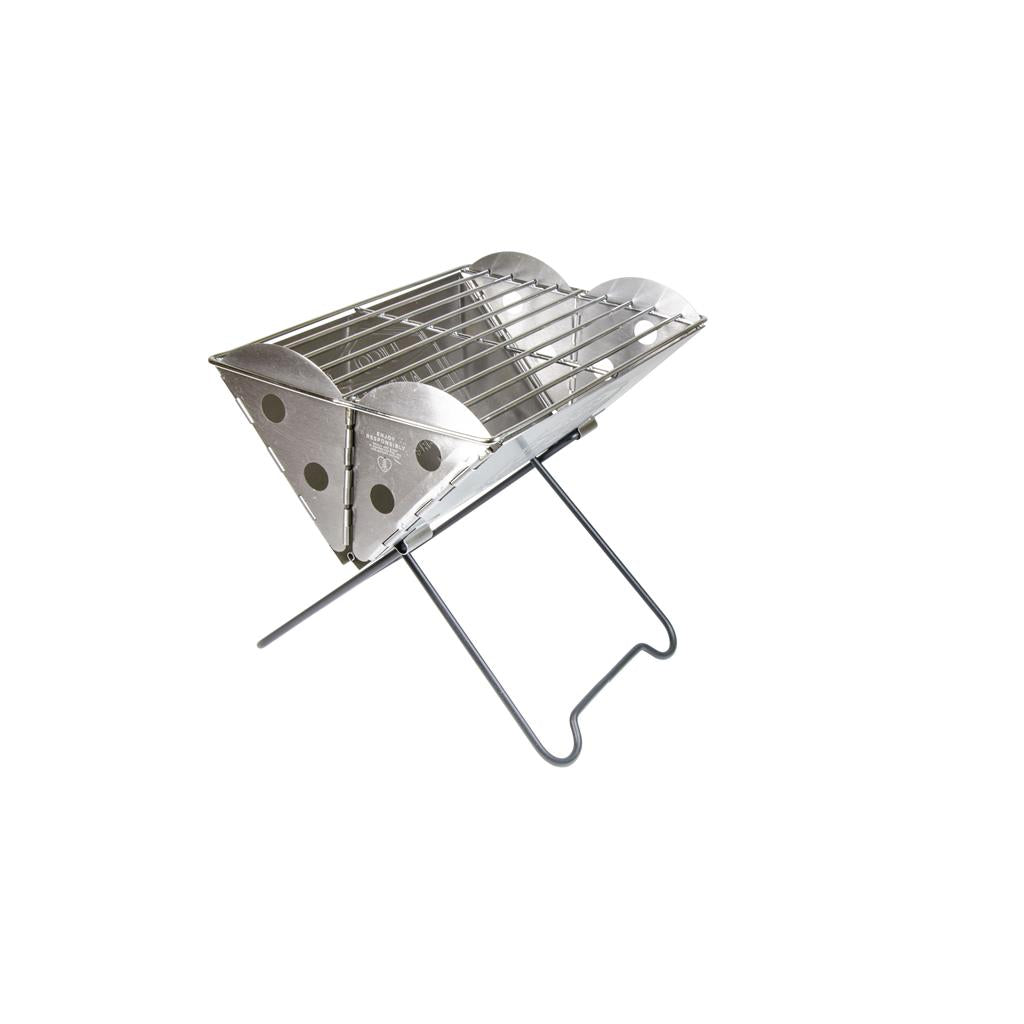
The Mini Flatpack portable grill & firepit serves 2-3 people and packs compact for easy transportation to the beach, campsite or barbeque. It is Stainless steel construction for durability and easy maintenance. It has a quick 30 second set-up and you are ready to go. All you need to do to set up this grill is unfold it and place the grates on top. Has a stable base for safe grilling. The sides of grill serve as wind break for grilling in windy conditions and it can be used as a firepit to help leave no trace when you are done. Dishwasher safe. 

FEATURES

  • Durable stainless steel construction
  • Quick 30 second setup
  • Can be used as a Firepit
  • Stable base for safe grilling

SPECIFICATIONS

  • Weight: 2 lbs
  • Grilling area: 9″ x 6.75″
  • Packed dimensions: 9.5″ x 8″ x 1.5″
  • Warranty is 1 year

Brrrr! Thank goodness for those fabric tubes that cover your face.

There are so many names: gaiter, neck-up, neck-tube. And, what about that thing people wear over their head and face? At Shepherd and Schaller we call it a Balaclava, or Clava. And we recommend them for bitter cold and hot sun.

There are so many names: gaiter, neck-up, neck-tube. And, what about that thing people wear over their head and face? At Shepherd and Schaller we call it a Balaclava, or Clava. We stock and wear them year round!

An investment of $15-$50 will protect your ski and keep you warm and dry.

Windproof panels, moisture-wicking fabrics, easy-fit sizing, multi-function from CTR. So, they’regreat for outdoor workers, athletes, everyone!

Quick-dry power-stretch fleece in kids and adult sizes. These things cover just your face or all the way over your head. Flexibility and crazy patterns rule!

Our year-round favorite: Merino Wool. The perfect fabric for cold, bitter cold and even sunny, hot weather. Shop all these and more in Downtown Wausau at Shep’s.

Merino Wool Greatest Hits:

  • It’s Odor resistant-Antimicrobial properties of merino wool means it kills bacteria . So, wear it repeatedly before washing. No matter how hot it is, you’ll feel fresh all day long. Your merino wool T-shirt or shirt will not smell – like cotton shirts do. On top of that, you don’t need to wash it each time you’ve worn it. Just hang it in the open air and enjoy it again the next day.
  • Merino Wool is Quick drying- a surprisingly fine fabric, that releases water easily. It’s dry long before your other garments are. Just put it in the machine, dry flat or place it on a hanger and wear it again in no time!
  • Merino Wool is Wrinkle resistant- The elastic properties of the merino fiber make it extremely wrinkle resistant. If you hang your garment to dry, ironing becomes optional. And when you’re travelling with a packed suitcase, just get out your merino wool clothes, hang them for half an hour and you’re all good. No annoying wrinkle damage from seatbelts or backpacks any more. It’s the ultimate on-the-go companion.
  • Merino Wool is Washable-The naturally protective outer layer of your merino wool shirt or T-shirt will prevent stains from being absorbed. However, when your favorite item is dirty, just wash it on low temperature. Not sure how to start? Check the care label inside your garment!
  • Merino Doesn’t itch-
  • Superfine merino wool fibers are only 17 microns thick, compared to a human hair which is between 60 and 180 microns in thickness causing them to be more flexible and less coarse against the skin. They also don’t fray as much as other fibers (thanks to their flexibility).
  • Merino is Durable-Merino wool is 6 times stronger than cotton. Each fiber can be bent back onto itself over 20.000 times. In comparison: cotton breaks after 3.200 times.
  • Merino UV resistant-The natural UV barrier of the fabric keeps you safe from damaging UV radiation from the sun – unlike synthetics and cotton. Sheep don’t get sunburn, right? Hello, worry-free summer times!