
Beyond the Campsite: Unexpected Places to Use Camping Furniture and Sleeping Bags

When most people think of camping chairs, portable tables, and sleeping bags, they picture a campground tucked among the pines. But today’s camping gear is designed for much more than overnight adventures.

Lightweight, comfortable, and easy to transport, camping furniture and sleeping bags have become go-to companions for everything from local events to backyard gatherings. Here are some of the best places to put your outdoor gear to work—even when you’re not heading to a campsite. Shop our in-stock Nemo camp furniture here.

Concerts, Festivals, and Community Events

Summer is packed with outdoor concerts, farmers markets, festivals, and community celebrations. A comfortable camp chair can turn an evening on the lawn into a relaxing experience, while a lightweight blanket or sleeping bag can provide warmth when temperatures dip after sunset.
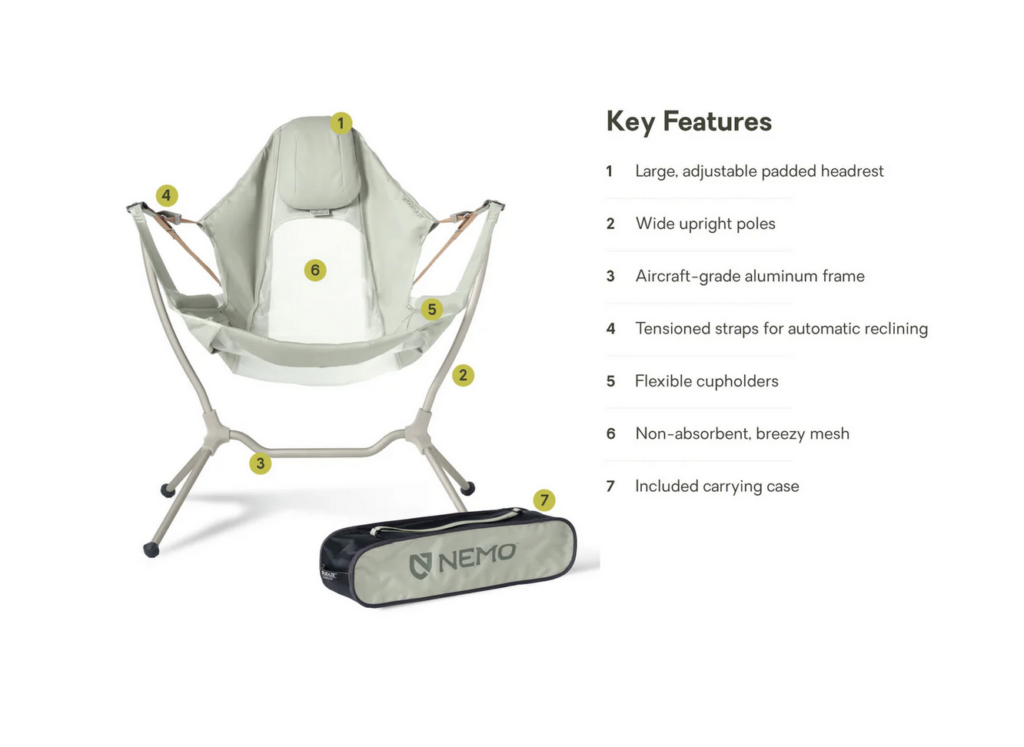
Whether you’re enjoying music at the park or watching fireworks with family, portable seating often becomes the most sought-after item at the event.

Backyard Gatherings
Who says camping gear has to leave home?

Camping chairs are perfect for backyard cookouts, bonfires, graduation parties, and family gatherings. Unlike traditional patio furniture, they can be moved wherever the conversation happens and stored away when not in use.

A sleeping bag can also be the secret ingredient for backyard sleepovers, stargazing nights, or impromptu movie nights under the stars.

Sporting Events and Tournaments

Parents, grandparents, and dedicated fans know that youth sports often involve long hours on the sidelines. Comfortable camping chairs, portable shade shelters, and small folding tables can make tournament weekends significantly more enjoyable.

For early morning games or chilly fall evenings, a sleeping bag can double as an oversized blanket to keep spectators warm and comfortable.

Cabin and Lake Life

In the Northwoods, camping furniture often becomes part of everyday lake living. Extra camp chairs around the fire pit, portable tables at the beach, and sleeping bags for overnight guests all come in handy throughout the season.

Because camping furniture is lightweight and easy to move, it’s ideal for gathering wherever the best view—or the best conversation—happens to be.

Tailgating and Game Days

Before the game begins, camping furniture helps create a comfortable gathering space for friends and family. Folding chairs, camp tables, and insulated accessories make tailgating more organized and enjoyable.

Sleeping bags can even provide extra warmth during late-season games when temperatures begin to drop.

Watching the Stars

One of the simplest pleasures of summer is lying under a clear night sky. A sleeping bag paired with a comfortable camp chair creates the perfect setup for stargazing, meteor showers, or simply enjoying a quiet evening outdoors.

No campsite reservation required.

Emergency Preparedness

Camping gear can also prove valuable when life doesn’t go according to plan. Sleeping bags, lanterns, and portable furniture can provide comfort during power outages, unexpected overnight guests, or emergency situations.

Having a few quality pieces on hand means you’re prepared for both adventures and surprises.

Road Trips and Day Trips

Camping furniture is perfect for spontaneous stops along the way. Whether you’re enjoying a scenic overlook, a picnic by the lake, or a roadside lunch, a comfortable chair can turn a quick stop into a memorable experience.

A sleeping bag stored in the vehicle provides warmth and comfort whenever plans change unexpectedly.

More Than Camping Gear

The best outdoor equipment isn’t limited to one purpose. Camping furniture and sleeping bags are designed to help people relax, gather, and enjoy time outdoors—whether that’s deep in the woods, at the ball field, around a backyard fire, or beside a Northwoods lake.

The next time you reach for your camping gear, don’t wait for a camping trip. Some of its best uses might be much closer to home.

Recommended Nemo Equipment Gear

Stargaze Reclining Camp Chair

Moonlander™ Dual-Height Camp Table

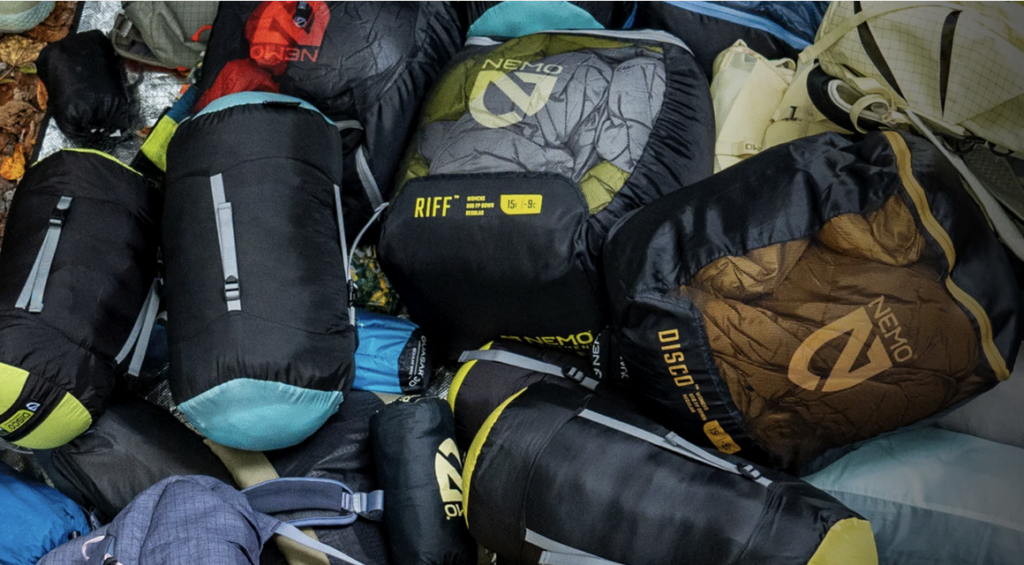
Disco™ Endless Promise® Down Sleeping Bag

Understanding Sleeping Bag Temperature Ratings

Nemo Equipment Experts Spill the Tea

Waking up well-rested can make all the difference in maximizing the next day’s adventures. Here’s a simplified guide to picking the right sleeping bag temperature rating for you and your plans.

Article by Nemo

WHY DO SLEEPING BAGS LIST SEVERAL TEMPERATURES?

The standardized testing used to assign temperature ratings to sleeping bags (the ISO Test) provides three temperature thresholds to help guide users, a COMFORT rating, a LIMIT rating, and an EXTREME rating. The names can be a bit misleading, but the reason for offering all three is because sleep comfort is a very personal preference, and whether you sleep warm or cold at night determines how much insulation you need in your bag. 

Typically, sleeping bags for women have more insulation in them, making them roughly 10–15 degrees Fahrenheit warmer than similarly rated men’s bags based on the premise that the average woman sleeps colder than the average man. But many of us live to break the rules, so these stereotypes shouldn’t blindly determine your own comfort and safety. It’s best to know how the ratings work to ensure that you’re choosing the bag that best matches the mood of your hypothalamus at 3:00 a.m. 

WHAT DOES EACH TEMPERATURE MEAN?

According to the ISO Test, the COMFORT rating is based on the air temperature at which the “average female” can sleep comfortably through the night (i.e. not curled up in a ball for warmth). The way we like to think of it is this: If you tend to sleep cold — you’re the blanket hog who’s always chilly — then you should pay closest attention to a bag’s COMFORT rating. That’s the lowest temperature at which your bag is likely to provide a cozy night’s sleep. 

The LIMIT rating is based on the temperature at which the “average man” can maintain his thermal equilibrium in a curled-up positionBasically, according to the test, the “average man” won’t necessarily be comfortable at this temperature, but he can sleep without expending energy shivering and is not in danger of hypothermia (the dream scenario, right?!). A more general way of interpreting this data is to apply it to warm sleepers. If you’re a warm sleeper — the fewer layers, the better! — then the LIMIT temperature is likely most relevant for you. That’s the temperature at which your bag shouldn’t be too hot or too cold. (Be prepared to supplement your bag with extra layers if this is your first time testing it out!) 

The EXTREME rating gives an idea of how cold the air could be before there’s serious risk of death from hypothermia in a matter of hours. Realistically, you want to avoid counting solely on the bag for survival at that temperature; extra layers, a fire, or sharing body warmth are likely necessary, as well.  

No matter which temperature bag you choose, you should always properly prepare before a night sleeping outside. Check the weather before you go and leave a safe margin between expected nighttime lows and your bag’s rating. 

HOW ARE THESE RATINGS DETERMINED?

Sleeping bags today are rated according to the International Organization for Standardization standard, using ISO 23537 (“the ISO Test” we reference above). The test involves placing a heavily instrumented electronic manikin, clad in long underwear, inside the sleeping bag in question, and positioning both on top of a foam sleeping pad. The temperature of the air is then cooled, and the amount of electrical energy needed to maintain the manikin’s initial temperature is measured. (If it takes a lot of energy input to keep the manikin toasty, then the bag isn’t very warm.) 

Through rounds of experimentation, these results have been correlated to the real-world outcome and the test can help predict what kind of comfort a person can expect from the bag. Here’s where it gets tricky, though: All our internal heat-generating engines run a little differently. Some of us pile on the blankets at night and some of us sleep in our skivvies with the window open in February. Individual preference, metabolism, and age can all throw a wrench into the simple-sounding outline above.  

We’ve done our best to translate the information into easier-to-understand guidelines, but it’s important to keep in mind that they’re not hard and fast rules. If you need further guidance in choosing your sleeping bag, Shepherd & Schaller’s experts are here to assist and Nemo’s Customer Service Team is happy to help too! 

Sleigh the Season! Shep’s Ladies’Night is Nov 13.

You deserve a little TLC during the holiday season ladies. Let us pamper you with discounts, expert advice, prizes and surprises. Just in time for 2025 ski season and holiday prep.

In addition to shopping the elevated styles you love from Shepherd and Schaller, learn insider tips to make your first ski trip stress free, successful dressing for a comfy, cozy, active Wisconsin winter, and enjoy treats and surprises that make the season joyful. Take a few minutes with us from 5-8 on Thursday, Nov 13 to celebrate women, shop and learn:

  • What makes women’s ski gear different? Why is it important?
  • How can a first-timer navigate the ski resort easily?
  • What to do when your ski day is over: gear and clothing storage & maintenance.
  • How to dress for comfort on the slopes, and Apres fun after.
  • Mountain Lifestyle must-haves; home goods and gifts.

Tag a friend and make it an evening. Reserve a spot to be eligible for door prizes. Click Here.

Giftable door prizes, free gift wrapping, and a visit from a handsome man in Red are on tap along with refreshments.

We’re partnering with Sport Obermeyer and our women-centric brands to celebrate the joy that winter brings when we focus on kindness, warmth and enjoying the beauty of the outdoors.

Deep discounts when we all need them most is another Shep’s gift to you. Happy Holidays Ladies.

Let’s Sleigh!

Good News! Shep’s Youth Outerwear Grows with Your Kiddos

Sport Obermeyer does it best, but you’ll find it on most of our kid’s snow jackets and pants (and bibs) size 7 and smaller. Because, hey, your tots grow faster than you can keep up with. We get it.

Take a look at our extensive selection of youth outerwear. All featuring materials and features to keep them warm, dry and playing outside long enough love the great outdoors, no matter the weather.

Shepherd and Schaller winter dressing experts are here to help you with proper layering and selecting accessories like gloves and face protection that won’t make you regret your choice to play outside.

Start ’em young!

Easily Make Your Wool Sweater Last a Lifetime

Dale of Norway is a heritage brand founded in the village of Dale, crafting premium knitwear since 1879. Inspired by Norwegian nature and traditions, they design and produce sweaters, cardigans, jackets and accessories in wool – garments created to combine timeless style with lasting quality.

Wool has many unique properties. The fibers are naturally antibacterial and self-cleaning, and have breathing properties that help regulate body temperature, whether we’re feeling hot or cold. Wool has a tremendous capacity to absorb vapor – up to 30% of its own weight before it feels damp or wet. In other words, wool also keeps you warm even when wet.

Antibacterial, dirt-repellent and self-cleaning properties give wool unique advantages when it comes to garments and textiles, and you can easily refresh your woolen clothes by hanging them out in the fresh air, instead of washing them. This saves both energy and detergents, while also extending the life of your garment. 

“The biggest mistake most people make is to wash wool incorrectly and wash it too often”, says Gro Eide, Dale’s Quality Controller for 30+ years. “My best tip for preserving wool garments for as long as possible is not to wash them too often, and instead hang them out to air.” 

Do you have a beloved hand-me-down you want to keep in top shape? Wish to pass your heritage garment to family?

To keep your wool garments lasting for many years while retaining their excellent quality, Dale of Norway has put together six top care tips:

  • 1. Less washing, more care: Wool sweaters don’t need to be washed as often as other garments. Limit washing and instead hang wool out to air after use. This helps to preserve the wool’s natural properties and extends the life of the garment. Another good piece of advice is to hang the garment for airing in a room with high humidity, such as the bathroom when you shower. It is also worth letting the garment rest by not wearing the same garment day after day.
  • 2. Gentle stain removal: If you get a stain on your wool sweater, avoid washing the entire garment unless absolutely necessary. Instead, gently remove the stain using a damp cloth. This reduces the risk of unnecessary wear on the fibers.
  • 3. Store your wool clothes correctly: When you’re not using your woolen sweater, Gro recommends storing it lying down instead of hanging it. This prevents the sweater from being stretched out over time. Also, make sure the sweater is clean and dry before putting it away. A sealed container can protect it from moths, dust and dirt.
  • 4. Hand wash or machine wash? If you use the wrong washing machine program, leave woolen garments in water, soak, or wash in too hot water and wash too vigorously, the garment can shrink. So do check the washing instructions on the wool sweater carefully. If it is marked with a hand wash symbol, we recommend washing the garment by hand at 30 degrees with a suitable wool detergent. Do not wring the garment. Instead rinse thoroughly and squeeze out the water with your fingers. If, on the other hand, the label has a machine wash symbol at 30 degrees, you can safely wash it in the machine on a gentle wool program with a detergent intended for wool. 
  • 5. Careful drying and shaping: After washing, it is important to dry the wool sweater properly. Lay it flat on a towel or drying rack and gently shape it back into the correct shape if necessary. Avoid hanging up wet wool sweaters as this can cause them to lose their shape. Remember that wool doesn’t usually withstand tumble drying, and, if in doubt, always let the garment air dry.
  • 6. Pilling removal: Pilling happens. It’s natural and easy to fix. Pilling (those little wool balls) is natural, especially in areas exposed to friction like seat belts or bags. Use a fabric shaver, wool comb, or simply pick them off by hand. Some yarn types and knit structures pill more than others, it doesn’t mean the sweater is worn out, just that it’s being loved and used.